Is your karate gi a professional technical tool or just a piece of white fabric? Selecting the right equipment is a strategic decision that impacts both your performance and your official standing within the Japan Karate Association. We recognize the difficulty of sourcing high-quality cotton in the UAE that balances durability with the breathability required for our local climate. Many practitioners share a valid concern regarding dojo compliance, as technical specifications like fabric weight and cut often determine eligibility for official examinations and international events.
This guide will help you master the technical requirements of your gear and ensure it meets rigorous JKA standards. We’ll examine the essential criteria for professional uniforms, from precise sleeve lengths to the mandatory placement of the JKA badge on the jacket. You’ll gain the technical insight needed to invest in a durable uniform that supports your long-term progression and reflects the commitment to excellence required of every student in the UAE.
Key Takeaways
- Identify the mandatory JKA branding and embroidery standards required for official tournament and examination compliance.
- Evaluate fabric density in ounces to select a karate gi that balances long-term durability with the operational efficiency needed for the UAE climate.
- Utilize precise measurement techniques to distinguish between Japanese and European cuts for an optimized, professional fit.
- Adopt specialized maintenance and hygiene protocols to preserve the integrity and professional appearance of high-quality cotton uniforms.
Understanding the Karate Gi: More Than Just a Training Uniform
The karate gi, or dogi, is a specialized technical tool designed to facilitate precise movement and tactical efficiency. While beginners might view the uniform as basic attire, experienced practitioners recognize it as a symbol of their professional commitment to Shotokan. The functional design allows for a full range of motion during high-impact striking and kicking, ensuring that the fabric doesn’t hinder the body’s natural biomechanics. By understanding the karate gi history and variations, students can appreciate how this equipment evolved to support the rigorous demands of Japanese martial arts.
Traditional Shotokan practitioners prioritize a specific aesthetic and functional standard that differs from modern sport karate uniforms. While sport versions are often ultra-light for speed in point-sparring, a traditional karate gi focuses on structural integrity and formal presentation. The stark white color isn’t an arbitrary choice; it represents a commitment to purity and the intentional removal of ego within the dojo. This uniformity ensures that every student starts on equal footing, focusing entirely on the technical synergy between mind and body during training.
The Anatomy of a Professional Karate Gi
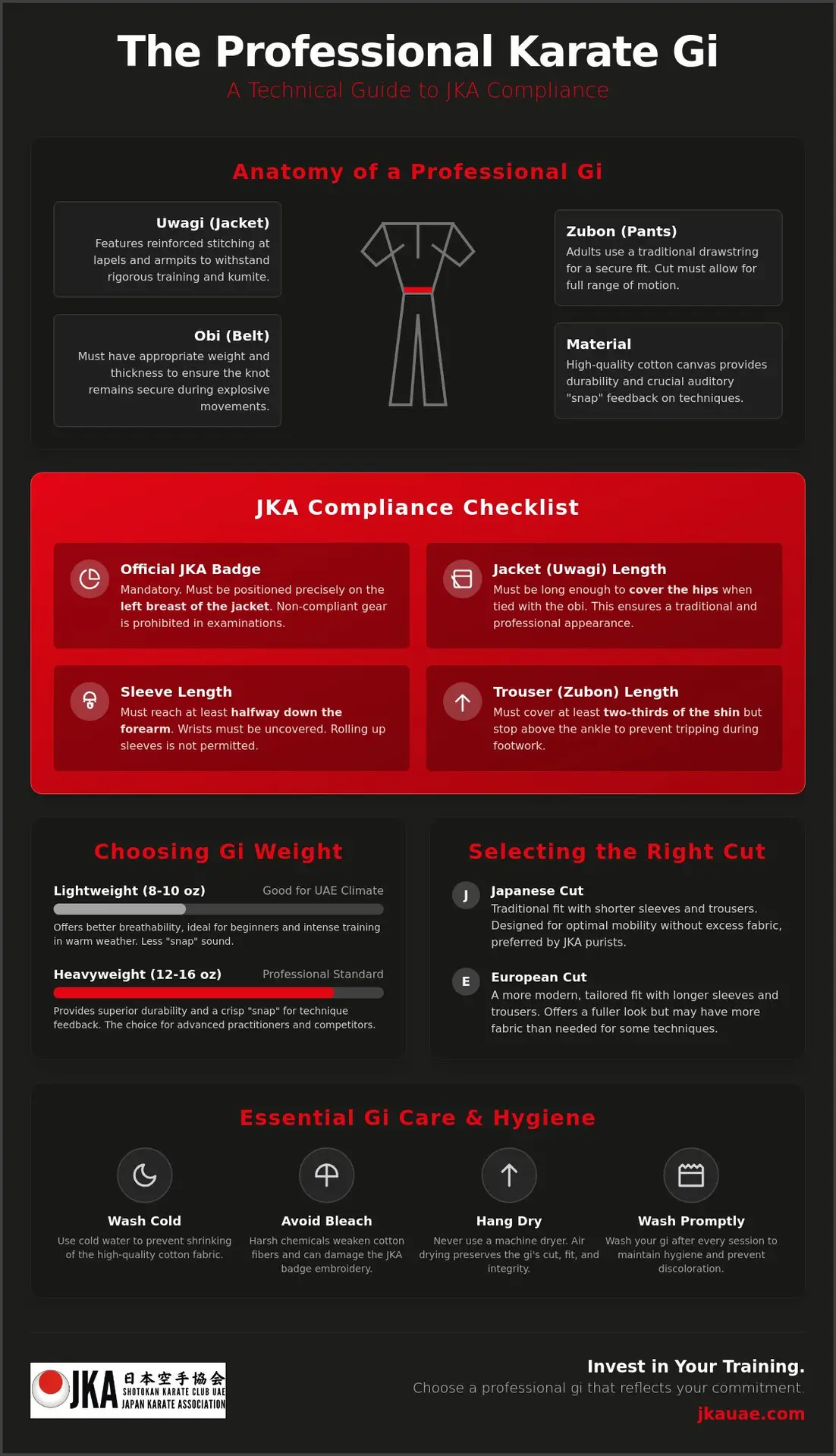
A professional-grade uniform consists of three primary components, each engineered for long-term durability. The Uwagi, or jacket, features reinforced stitching at the lapels and armpits to withstand the rigors of kumite and repetitive kata practice. For the Zubon (pants), younger students in our Kids Karate Classes often benefit from elastic waists for ease of use, while adults typically utilize the traditional drawstring for a secure, customized fit. Finally, the Obi (belt) should possess a weight and thickness that complements the gi fabric, ensuring the knot remains secure during explosive movements.
Why Quality Material Matters for Beginners
High-quality canvas provides essential auditory feedback known as the “snap.” This sound occurs when a technique is executed with correct speed and tension, serving as a diagnostic tool for both the student and the instructor. In the UAE climate, fabric density is a critical factor for operational efficiency. Professional-grade cotton facilitates moisture-wicking, which is vital during intensive sessions in Dubai. We advise against costume-grade polyester blends; these materials often become transparent when wet and lack the structural resistance needed to support proper Shotokan form. Investing in a professional karate gi ensures your gear remains a reliable partner throughout your journey toward the black belt.
Official JKA Karate Gi Requirements for Dubai Students
Adhering to international standards ensures that every student represents the Japan Karate Association with technical precision. For practitioners in Dubai, the karate gi must align with specific branding and appearance protocols established by the JKA headquarters in Japan. These regulations aren’t merely suggestions; they’re operational requirements that maintain the professional atmosphere and institutional pride of a JKA dojo. When you step onto the mat, your attire serves as a visual commitment to the standards of excellence we expect from our members.
The most critical identifier is the official JKA badge, which must be positioned precisely on the left breast of the jacket. Following the Official JKA uniform protocol, any additional national badges must not exceed 10cm x 10cm. This focus on a standardized appearance is particularly vital during JKA belt examinations, where non-compliant gear is strictly prohibited. Standardized uniforms eliminate distractions, allowing examiners to focus entirely on the student’s technical proficiency and spirit.
Mandatory Features for JKA Shotokan Training
Specific dimensions define the traditional Shotokan aesthetic and support the functional requirements of the art. The jacket must cover the hips when tied with an obi, while sleeves should reach at least halfway down the forearm without covering the wrists or being rolled up. Trousers need to cover at least two-thirds of the shin but must stop before the ankles to prevent tripping during rapid footwork. These technical specs facilitate proper movement while ensuring a clean, unadorned white appearance. This professional uniform works in tandem with your JKA Passport to document your progress within a globally recognized framework, ensuring your rank is respected in over 100 countries.
Official Gear vs. Generic Alternatives
Generic alternatives found in local retail markets often fail to meet these rigorous criteria, frequently featuring excessive branding or incorrect fabric weights. Using non-compliant gear creates significant risks during international seminars where high-ranking instructors expect strict adherence to JKA tradition. We provide access to an Official JKA Karate Gi to ensure our students remain focused on their technique rather than equipment failures or protocol violations. Consistency in the dojo builds collective discipline and reinforces the professional standards we uphold across all our UAE branches. By choosing official gear, you’re investing in a durable tool that supports your long-term growth and ensures you’re always ready for the next stage of your martial arts career.
Comparing Karate Gi Weights: Lightweight vs. Heavyweight Canvas
Selecting the density of a karate gi is a strategic decision that directly influences a practitioner’s physiological comfort and technical output. In the martial arts industry, fabric density is measured in ounces (oz), representing the weight of the material per square yard. Choosing the correct weight requires a balanced evaluation of durability, structural integrity, and breathability. While a heavier uniform offers superior longevity, a lighter alternative provides the agility necessary for high-intensity movement in the specific climate conditions of the UAE.
Advanced practitioners typically favor heavyweight canvas for its technical synergy with Shotokan kata. The increased resistance of the fabric provides essential feedback during explosive transitions. However, for those enrolled in our kids karate classes, the priority shifts toward ease of motion and moisture management. Understanding these distinctions ensures that every student operates at peak efficiency while maintaining the professional appearance required by JKA standards.
8oz to 10oz: The Student Lightweight Gi
Lightweight uniforms are the standard entry point for beginners and young children. These garments usually feature a poly-cotton blend, which significantly reduces wrinkling and prevents the excessive shrinkage common in 100% cotton alternatives. For frequent training sessions in Dubai, the faster drying times of an 8oz or 10oz karate gi are a major operational advantage. The thinner material allows for maximum ventilation, ensuring that younger students remain focused on their technique rather than heat-related discomfort. These uniforms provide the necessary flexibility for developing fundamental striking and kicking mechanics without the weight of professional-grade canvas.
12oz to 14oz: The Professional Canvas Gi
Senior practitioners and instructors opt for 12oz to 14oz heavyweight canvas to achieve the iconic “snap” during crisp movements. This auditory feedback is a hallmark of high-level technique, indicating that a strike or block has reached its maximum potential tension. Beyond the sound, the structural weight of the jacket helps maintain a sharp, professional silhouette even during rigorous kumite. A 14oz gi is a long-term investment; with proper JKA gi maintenance and care, these uniforms can withstand over a decade of daily use. While the initial break-in period requires patience, the resulting durability and technical precision make heavyweight canvas the executive choice for those committed to the Shotokan path.
How to Measure for the Perfect Fit: Sizing for Kids and Adults
Achieving a precise fit is essential for maintaining the professional standards of the Japan Karate Association. Generic sizing charts often overlook the technical requirements of a Shotokan-specific karate gi, which demands a structured yet roomy cut to support deep stances and rapid transitions. When selecting a uniform, your primary metrics are total height and wingspan, but you must also account for the natural properties of the material. High-quality 100% cotton canvas typically experiences 5% to 10% shrinkage after the initial wash cycles. We recommend sizing up to ensure the garment remains dojo-compliant throughout its operational lifespan.
The distinction between a Japanese Cut and a European Cut is a critical factor in your selection. A Japanese cut features intentionally shorter sleeves and trouser legs, providing the traditional aesthetic favored by senior instructors. In contrast, the European cut offers a longer fit that some practitioners find more suitable for modern training environments. For students in our teen karate classes, we pay close attention to these dimensions during rapid growth spurts to ensure their movement isn’t restricted by an outgrown uniform.
The 5-Point Fit Check
To verify that your gear meets professional standards, perform a comprehensive fit check. Use these criteria to evaluate your uniform’s performance:
- Sleeve length: The fabric should end just above the wrist bone to prevent interference with hand techniques.
- Trouser length: Trousers must clear the ankle to eliminate any risk of tripping during footwork.
- Jacket overlap: Ensure the jacket panels overlap sufficiently so the side ties stay secure during intense kumite.
- Shoulder width: The seams must allow for full rotation in blocks and punches without pulling the fabric taut across the back.
- Jacket length: The hem must adequately cover the hips when the obi is tied to maintain a professional silhouette.
Sizing for Growing Children
Parents should adopt the “one-size-up” rule to maximize the utility of the uniform. This strategy allows for natural growth while maintaining the integrity of the garment. If a uniform is initially too long, it’s possible to hem the sleeves and trousers, provided you maintain the traditional silhouette and don’t compromise the reinforced stitching. As children progress, they’ll eventually transition from elastic waists to traditional drawstring pants, which offer the superior security needed for advanced training. If you’re unsure about the correct dimensions for your child, you can consult our professional instructors in Dubai for a personalized sizing assessment.
Maintaining Your JKA Gi: Essential Care for UAE Practitioners
Preserving the pristine condition of your karate gi is an operational necessity that reflects your personal discipline and respect for the dojo. In JKA tradition, a crisp, white appearance isn’t merely aesthetic; it’s a visual representation of a practitioner’s attention to detail and commitment to excellence. Given the high-perspiration environment of training in the UAE, maintaining fabric integrity requires a strategic approach to hygiene and laundry management. Without specialized care, heavy cotton uniforms can quickly succumb to yellowing or lose the structural stiffness required for professional technique.
Drying techniques also play a pivotal role in preserving the auditory “snap” of the material we analyzed in previous sections. While tumble drying might seem convenient, the high heat can cause uneven shrinkage and soften the canvas excessively. Air drying in a shaded area is the preferred method for high-grade cotton. This process allows the fibers to retain their natural rigidity, ensuring your movements produce the sharp feedback necessary for advanced kata performance.
Washing and Whitening Best Practices
To ensure long-term durability, you must adopt specific washing protocols that protect the natural fibers of your uniform. Cold water washing is essential for 100% cotton garments to minimize the 5% to 10% shrinkage discussed in our sizing analysis. You should never use chlorine bleach on high-quality canvas, as it weakens the fabric and can lead to a premature breakdown of the reinforced stitching. Instead, consider these professional maintenance strategies:
- Natural Whitening: Utilize baking soda or specialized sports detergents designed to break down organic proteins without damaging the cotton.
- Immediate Action: Wash your uniform as soon as possible after training to prevent sweat salts from setting into the fibers.
- Inversion: Turn the jacket and trousers inside out before washing to protect the official JKA embroidery from abrasion.
Ironing and Folding: The Mark of a Disciplined Student
The way you transport and store your gear is just as important as the training itself. Senior ranks expect a sharp, professional silhouette, which necessitates ironing the lapels and sleeves to maintain a crisp edge. When training concludes, utilize the traditional shitate method of folding. This technique isn’t just about tradition; it’s a functional solution that minimizes wrinkling and ensures your karate gi is ready for the next session. In the high humidity of Dubai, never leave a damp uniform in a closed gym bag. Use a breathable mesh bag or hang the garment in a well-ventilated area to prevent mildew and odors. By implementing these comprehensive care solutions, you protect your investment and uphold the high standards of the Japan Karate Association in every class.
Secure Your Future in Shotokan Karate
Selecting your equipment with precision ensures you meet the rigorous international standards required for official recognition. You now understand the strategic importance of fabric weight, the necessity of JKA-compliant branding, and the maintenance protocols required for the UAE climate. Investing in a high-quality karate gi reflects your dedication to the Shotokan path and prepares you for the technical challenges of international seminars and examinations.
Our dojo serves as the official UAE branch of the Japan Karate Association, providing a direct link to the global curriculum and authorized JKA passports. We combine expert instruction with a commitment to professional excellence, ensuring every student has the tools needed to succeed. Register for Classes and Order Your Official JKA Gi Today to align your training with a world-class martial arts organization. We’re ready to support your progress as you master the art of Shotokan.
Frequently Asked Questions
Do I need a specific karate gi for JKA Shotokan classes in Dubai?
Yes, all practitioners must adhere to standardized appearance protocols that require a plain white uniform with the official JKA badge on the left breast. For those participating in official belt examinations or international seminars, wearing an Official JKA Karate Gi is a mandatory requirement. This ensures that your equipment meets the technical and branding standards recognized by the Japan Karate Association globally.
What is the best fabric weight for a beginner karate student?
A lightweight fabric between 8oz and 10oz is the optimal choice for those starting their martial arts journey. This weight provides the necessary ease of movement for learning fundamental strikes and blocks while offering superior breathability in the UAE climate. Lighter uniforms are also easier to maintain and dry faster, which is a significant operational advantage for students training multiple times per week.
How much will a 100% cotton karate gi shrink after the first wash?
Expect a high-quality 100% cotton uniform to shrink by approximately 5% to 10% during its initial laundering cycles. Because of this natural contraction, we advise students to select a size slightly larger than their current measurements. This strategic sizing ensures that the karate gi maintains a professional fit and remains compliant with dojo length requirements after the fabric has stabilized.
Can I wear a black or colored gi to JKA training sessions?
No, JKA regulations strictly mandate the use of a clean, plain white uniform for all training sessions and official events. The white color is a fundamental symbol of purity and the removal of ego within the dojo environment. Maintaining this uniform standard fosters a sense of group discipline and ensures that the focus remains entirely on technical progression and the synergy of the class.
How often should I wash my karate gi?
You should wash your uniform after every training session to uphold professional hygiene standards and prevent the buildup of sweat salts. In the high-perspiration environment of Dubai, immediate laundering is essential to stop fabric yellowing and permanent odors. Regular care using the specialized protocols we’ve discussed will preserve the crisp appearance and structural integrity of the cotton for years of training.
Is it better to have a drawstring or elastic waist for kids karate pants?
Elastic waists are generally preferred for younger children as they allow for independent dressing and remain secure during high-energy movements. As students mature and enter teen or adult categories, traditional drawstring pants become the professional standard. Drawstrings offer a more customized, secure fit that can withstand the rigorous demands of advanced kumite and the weight of a professional-grade karate gi.
What is the difference between a kata gi and a kumite gi?
A kata gi is engineered from heavyweight canvas to provide structural stiffness and the iconic auditory “snap” during crisp techniques. Conversely, a kumite gi is designed with lighter, more flexible materials to facilitate explosive speed and maximum agility during sparring. Most JKA practitioners in Dubai utilize a versatile medium-to-heavyweight uniform that provides the durability and professional silhouette required for both disciplines.
Where can I buy an official JKA-approved karate gi in the UAE?
Official JKA-approved uniforms and equipment are available through the JKA Shotokan Karate Club Dubai, the only authorized branch of the Japan Karate Association in the UAE. Purchasing directly from the dojo ensures that your gear is fully compliant with international standards for examinations and tournaments. Our instructors provide professional guidance to help you select the correct weight and fit for your specific training needs.