
What Is a JKA Karate Grading?
A JKA karate grading is a structured examination of a student’s development in Kihon, Kata and Kumite, together with control, etiquette, concentration and readiness for the responsibilities of the next rank. A student should not enter an examination simply because a certain number of months has passed. The instructor recommends grading when the student has demonstrated sufficient technical and personal development.
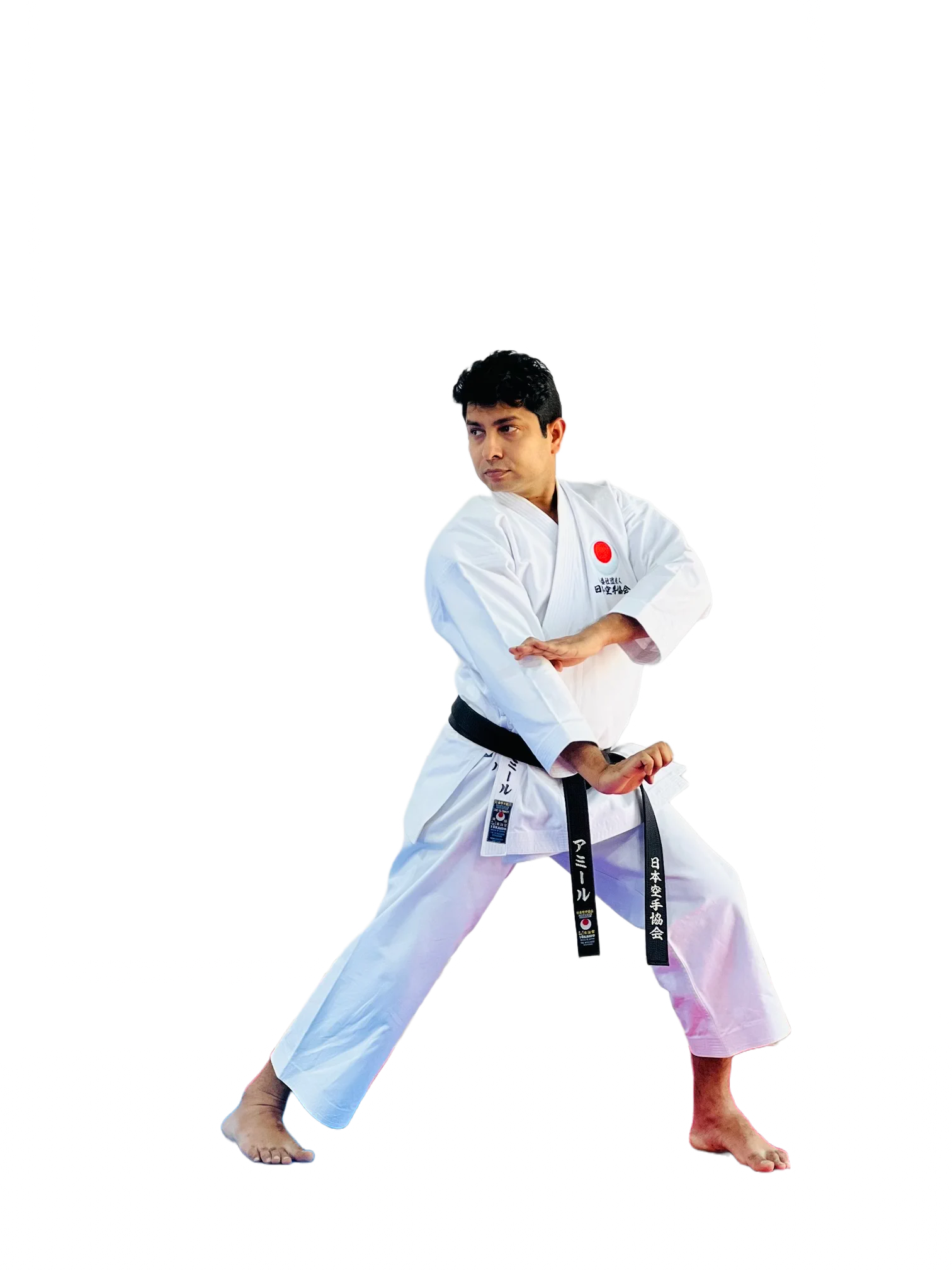
Sensei Ameer Adukkattil
JKA 6th Dan · Instructor B · Judge A · Examiner C · JKA Branch Representative UAE · UAE Karate Federation Judge & Referee
Sensei Ameer began Karate in 1991 and has taught in Dubai since 2011. His work includes Kyu and Dan preparation, Black Belt development, instructor training, judging education and traditional JKA technical instruction. Last technically reviewed: July 2026.
The Purpose of JKA Karate Grading
A belt examination should not be treated as a reward for attendance or as a race between students. Its purpose is to confirm whether a student has developed sufficiently at the present rank and is ready to begin studying the requirements of the next level.
The Japan Karate Association publishes a progressive Kyu and Dan grading framework. The official guideline develops from fundamental stationary techniques at the early levels toward moving basics, Kata and increasingly demanding Kumite requirements as the student advances.
JKA announced a revised Kyu and Dan grading guideline effective from April 2022. The club follows the applicable official technical framework together with local examination administration and instructor preparation procedures.
Grading Is a Checkpoint, Not a Finish Line
Passing an examination does not mean the student has perfected every technique. It means the student has demonstrated sufficient development to continue training at the next stage.
Students who need the complete belt-order explanation should read our dedicated JKA Karate Belt System in Dubai . This examiner’s guide focuses on the process, readiness and assessment rather than repeating the full belt-by-belt syllabus.
How We Decide Whether a Student Is Ready
The decision to recommend a student for grading is based on the complete training picture. Examination readiness is not decided by one good class, one competition result or the student’s desire to receive a new belt.
Technical knowledge
The student must know the required Kihon, Kata and Kumite material for the current rank.
Technical quality
Techniques should show suitable posture, direction, balance, control and coordination.
Consistent attendance
Regular training gives instructors enough time to evaluate development and correct weaknesses.
Dojo conduct
Students should demonstrate concentration, respect, effort and the ability to follow instruction.
Physical control
The student must perform safely and maintain appropriate control during partner work.
Current-rank maturity
The student should be comfortable at the present level before attempting advancement.
Important: Paying an examination fee, attending a preparation session or reaching an expected calendar date does not guarantee a pass. The final outcome depends on the student’s performance and the authorised examination process.
I do not recommend a student only because another student of the same age is grading. Each person develops differently. My responsibility is to decide whether the student is ready to demonstrate the current standard with confidence and control.
Sensei Ameer Adukkattil · JKA Examiner CWhat Examiners Assess in Kihon, Kata and Kumite
JKA grading is structured around three connected areas of technical study. An examiner does not look only at whether a student remembers the sequence. The quality, control and understanding shown in the performance are also important.
Kihon
Kihon is the study of fundamental techniques. Examiners observe stance, posture, movement direction, hip action, coordination, balance, focus and completion of each technique.
Kata
Kata assessment includes correct sequence, direction, rhythm, balance, transitions, breathing, focus and the ability to express the technical character of the form.
Kumite
Kumite examines distance, timing, control, awareness, correct attack and defence, composure and safe application with a partner.
What Changes as Students Advance?
At beginner levels, the emphasis is placed on understanding basic positions, directions and simple movements. As students progress through the Kyu grades, examiners expect stronger coordination, clearer transitions, more developed Kata performance and greater control during partner work.
The standard should rise gradually. A technique that may be acceptable for an early beginner is not automatically sufficient for a senior Kyu student. Higher rank brings greater responsibility for technical accuracy and self-control.
Official Technical Reference
Students and parents may review the official Japan Karate Association grading material through the JKA Kyu / Dan Grading Guideline . Individual students should still follow the instructions given by their Sensei because preparation depends on rank, age, development and the scheduled examination.
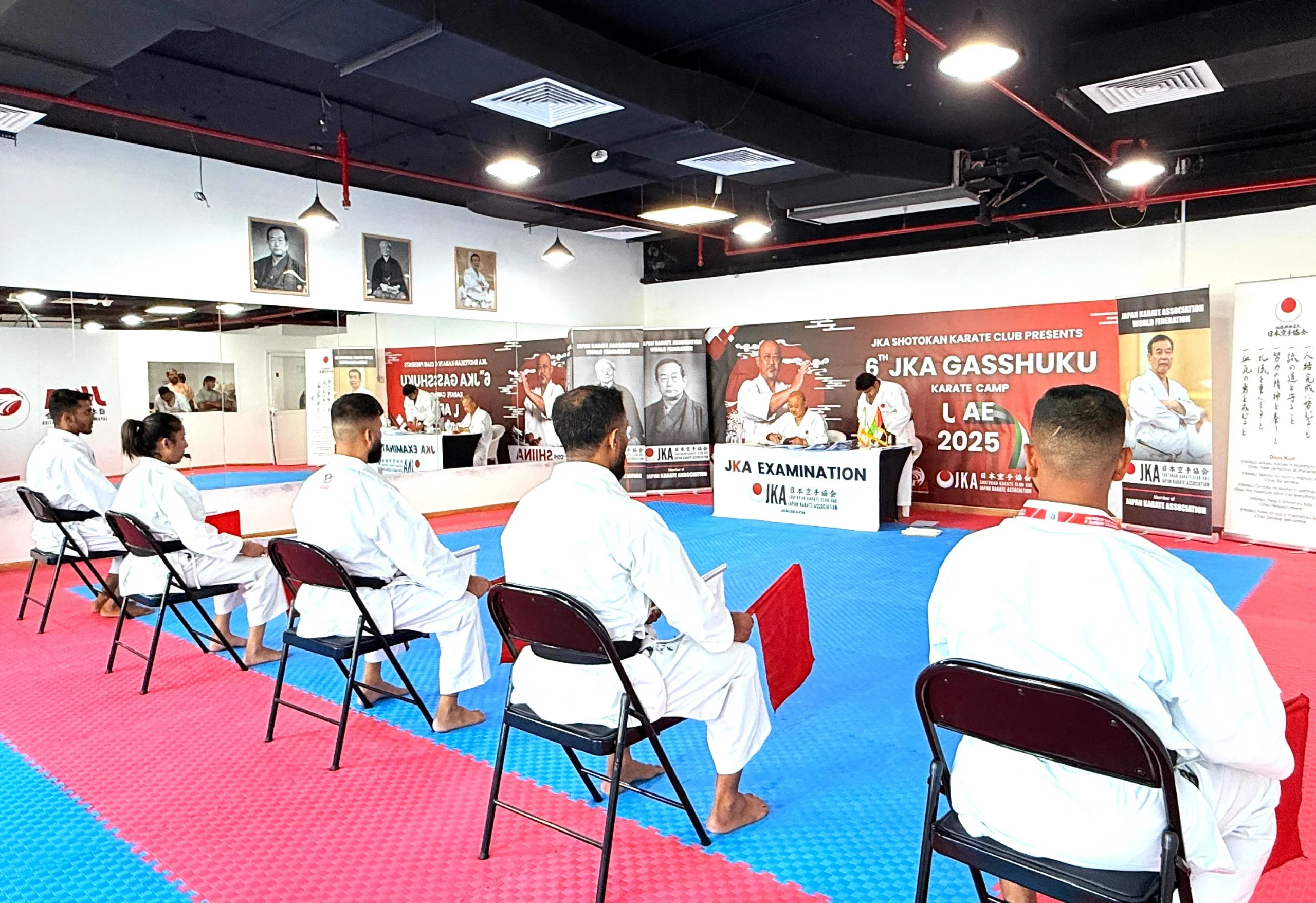
JKA Instructor, Judge and Examiner Qualifications
The Japan Karate Association maintains separate professional qualifications for instructors, judges and examiners. These qualifications assess technical knowledge, teaching ability, judging competence and examination responsibility rather than relying only on an individual’s Dan grade.
Sensei Ameer Adukkattil holds JKA Instructor B, Judge A and Examiner C qualifications in addition to his JKA 6th Dan rank.
What I Look for Beyond Remembering the Movements
A student may remember every movement and still need more preparation. Karate grading is not a memory test. The examiner must see whether the student can perform with suitable structure, attention, control and understanding.
Posture and stability
The student should maintain appropriate body alignment and stable movement rather than collapsing the stance or losing balance after each technique.
Focus and concentration
Students should listen carefully, respond to commands and continue with composure even when they make a small mistake.
Control and safety
Kumite must demonstrate control. Aggressive, uncontrolled contact is not evidence of advanced karate and can show that the student is not yet ready.
Effort and spirit
Examiners observe whether the student performs with commitment, appropriate energy and the willingness to continue through a demanding examination.
Etiquette
Correct bowing, respectful conduct, appropriate waiting behaviour and attention to instructions form part of the student’s overall dojo education.
A grading should reveal the student’s normal training standard. It should not depend on one last-minute practice session. Consistent training is what produces confident performance.
Sensei Ameer AdukkattilHow to Prepare Correctly for a JKA Belt Examination
Good preparation begins during normal classes, not only when an examination date is announced. Students should build habits that allow them to perform their syllabus without depending constantly on another student.
1. Attend regular classes consistently
Consistent attendance allows instructors to correct technical details gradually. Long gaps followed by intensive last-minute training usually create uncertainty and unnecessary pressure.
2. Know the required syllabus
Students should confirm the correct Kihon, Kata and Kumite requirements with the instructor. Do not rely only on an unofficial video, another student’s rank or information from a different organisation.
3. Practise corrections—not only repetitions
Repeating a movement many times is useful only when the movement is being performed correctly. Students should remember the specific corrections given during class.
4. Practise Kata independently
The student should know the direction, sequence and rhythm without copying the person in front. Parents can encourage practice but should avoid teaching technical corrections unless guided by the instructor.
5. Prepare the Karate Gi and required documents
The uniform should be clean, correctly fitted and suitable for the examination. The club will advise students about applicable membership records, examination forms, photographs or other administrative requirements before the event.
6. Sleep, hydrate and arrive early
A rested student is more likely to concentrate and perform normally. Arriving early also allows time for registration, changing, warm-up and mental preparation.
Do not use this article as a substitute for your instructor’s current examination instructions. The applicable syllabus and administrative procedure should always be confirmed directly with the club.
What Happens on JKA Grading Day?
The exact schedule may vary according to the number of candidates, venue and examination level, but most students can expect a structured process similar to the following.
Arrival and registration
Students arrive at the instructed reporting time, confirm registration and prepare their uniform and required documents.
Warm-up and organisation
Candidates are grouped according to rank or examination order and complete an appropriate warm-up.
Kihon assessment
Students demonstrate the required fundamental techniques according to examination commands.
Kata assessment
The required Kata is performed individually or in an organised group, depending on the examination procedure.
Kumite assessment
Students demonstrate the applicable partner exercise with attention to timing, distance, technique and control.
Completion and results process
Candidates complete the examination and wait for the official result and administrative confirmation communicated by the club.
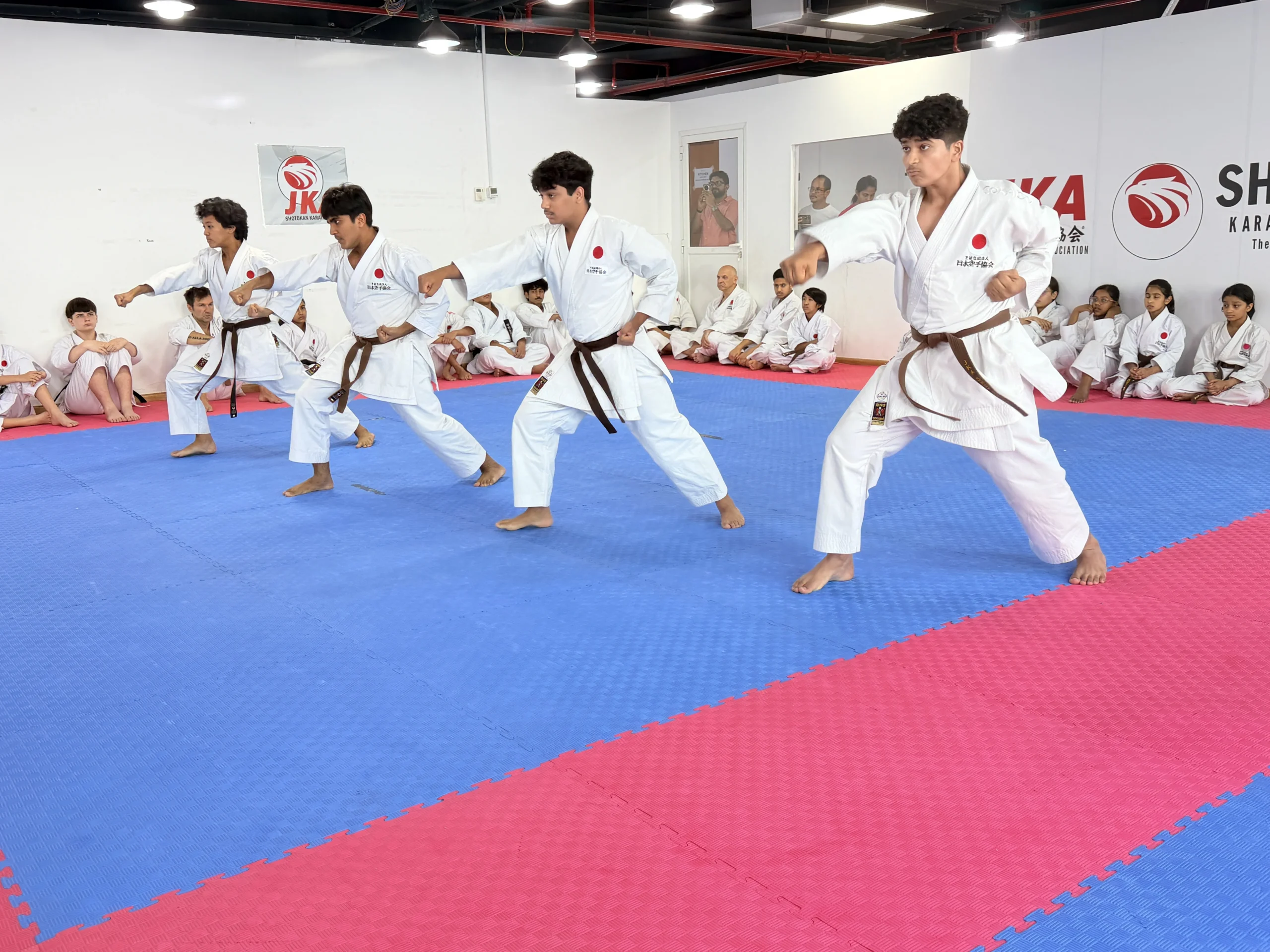
What happens when a student makes a mistake?
A single small mistake does not always define the entire examination. Students should avoid stopping, showing frustration or looking to others for help. They should recover calmly and continue according to the examiner’s instruction.
How Parents Can Support a Child Before Grading
Parents play an important role in helping children approach grading positively. The goal is to support preparation without creating unnecessary fear or comparing one child with another.
- Encourage regular attendance rather than last-minute intensive practice.
- Help the child prepare the uniform and arrive on time.
- Avoid promising a new belt before the examination.
- Do not compare the child’s progress with siblings or classmates.
- Praise effort, discipline and improvement—not only the result.
- Follow the instructor’s guidance when a student needs additional preparation.
A Helpful Message for Children
“Do your best, listen carefully and show what you have learned. The examination is one part of your karate journey.”
A student who is not recommended for the next grading has not failed as a person. In many cases, additional training protects the student from entering an examination before they are ready and helps build a stronger long-term foundation.
Common Karate Grading Mistakes
These are common problems seen during preparation and examinations. They can usually be improved through consistent attention to instructor feedback.
Trying to perform too fast
Speed without posture, balance or completion can make otherwise familiar techniques look uncontrolled.
Copying another candidate
Looking sideways during Kata or waiting for another student shows that the syllabus is not yet independent.
Ignoring stance and posture
Students sometimes focus only on the hands while balance, foot position and body alignment deteriorate.
Losing control in Kumite
More force does not automatically mean better karate. Distance, timing, technique and safe control remain essential.
Stopping after a small error
Candidates should recover, maintain composure and continue instead of giving up or showing frustration.
Depending on last-minute preparation
A few intensive sessions cannot replace the coordination and confidence developed through regular training.
Results, Belt Advancement and JKA Certificates
Examination results are communicated according to the club’s event and administrative procedure. Students should wait for the official announcement rather than assuming the result immediately after completing the test.
JKA Certificate Policy
At JKA Shotokan Karate Club Dubai, Kyu and Dan certificates are processed through the Japan Karate Association system. The club does not create its own independent replacement grading certificates as substitutes for official JKA certification.
Certificate processing time and required administrative information may vary. Students should keep their name, date of birth, current rank and membership details accurate.
After a successful grading, students begin training toward the technical requirements of the new rank. Receiving a belt is not permission to reduce effort; it represents a responsibility to improve.
The path from Kyu rank to Black Belt
Kyu grades provide the technical foundation for Dan training. Black Belt should not be viewed as the end of karate education. Shodan represents the beginning of a deeper stage of study, responsibility and refinement.
JKA Karate Training and Grading Preparation in Dubai
Students prepare through regular JKA Shotokan Karate classes at their registered branch. Examination dates, eligibility and administrative instructions are communicated by the club.
Silicon Oasis
Office 1102, Palace Towers, Dubai Silicon Oasis.
View branch details →Al Nahda-2
Office 203, Ahli House-C, Al Nahda-2, Al Qusais.
View branch details →Al Furjan
Traditional JKA Shotokan Karate at Al Furjan Clubhouse.
View branch details →Frequently Asked Questions About JKA Karate Grading
These answers explain general club practice. Students must confirm the current examination date, syllabus and administrative requirements with their instructor.
How often can a student take a JKA Kyu grading?
What is assessed in a JKA karate belt examination?
Does attending every class guarantee a grading pass?
Can parents request a belt examination for their child?
What should a student bring to the examination?
Is the grading fee included in the monthly membership?
Who issues JKA Kyu and Dan certificates?
What happens when a student is not ready to pass?
How long does it take to reach Black Belt?
Prepare for JKA Grading Through Consistent Karate Training
New students can begin with a free trial class. Existing students should speak with their instructor about current progress, syllabus corrections and examination eligibility.
Technical References and Further Reading
- Japan Karate Association — Revised Kyu / Dan Grading Guideline
- Japan Karate Association — Frequently Asked Questions
- JKA Shotokan Karate Club Dubai — Karate Belt System
- Sensei Ameer Adukkattil — Instructor and Examiner Profile
This article provides general educational guidance. The current syllabus, examination procedure, eligibility and documentation requirements must be confirmed directly with the instructor and the official examination notice.